
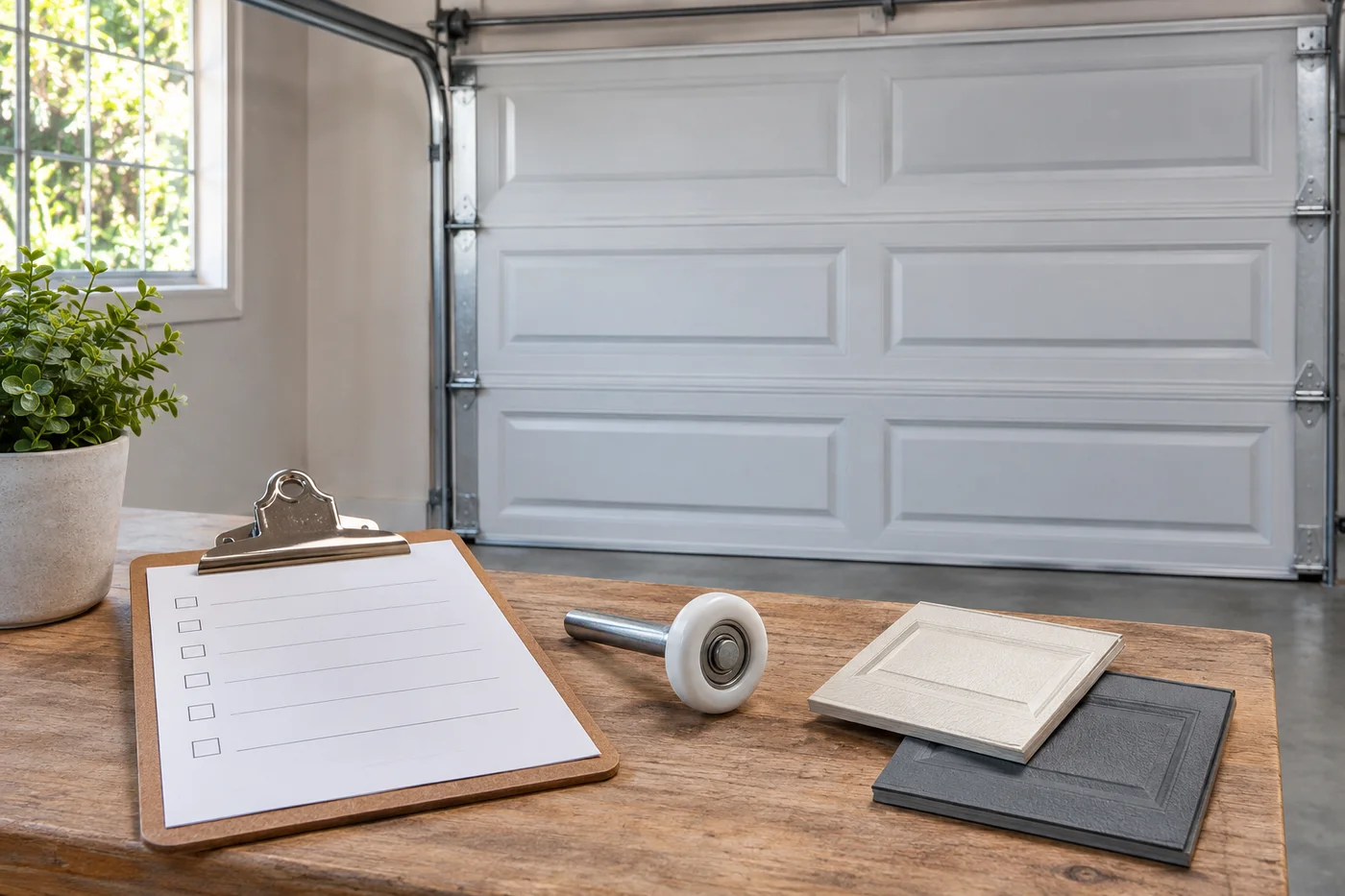
A symptom describes the effect you noticed
A garage door can stop, sound different or move unevenly for more than one reason. Saying what happened is useful, but it doesn't identify every component that needs attention. An inspection may reveal a condition that wasn't visible or understood during the first call.
Keep the original description simple: what moved, what stopped and whether the opener ran. If the door is unstable, leave it alone and keep people clear. Don't repeatedly operate it or disturb springs, cables and other loaded parts to produce a clearer demonstration.
The Corona garage-door page explains the separation between the door, opener and controls. A remote that failed is not the same request as a door that cannot move safely. A replacement motor isn't automatically an answer to both.
Ask what the inspection added to the picture
If the proposed work changes, ask which finding led to that change. A useful explanation connects the condition, the part and the intended result. It should be clearer than a broad statement that the whole system needs an upgrade.
You don't have to diagnose the mechanism or argue from an online photograph. Ask to understand what is being recommended for the installed equipment and why the initial scope no longer describes it. If something remains uncertain, keep that uncertainty visible in the agreement.
Regional customer discussions show how confusing a revised parts list can feel. Those accounts are observations of customer concerns, not verified technical assessments or prices for your garage. Do not use another person's repair bill as proof that the same components are needed at your home.
Separate parts retained from parts replaced
A quote may concern a specific repair while keeping the door and opener. Another may propose replacing an opener, changing controls or supplying a new door. Those are different outcomes. Identify which existing equipment would stay in each option.
Ask how the proposed change relates to the fault and whether other work is optional or part of the required scope. A recommendation should not become more confusing as more component names are added. Keep the result tied to safe normal operation of the actual opening.
If a replacement door is being considered, ask about its scope separately from a mechanical repair. An older appearance doesn't by itself establish that the entire door must be replaced. Condition, compatibility and the work available for that equipment need their own assessment.
The controls and the household access plan also matter
A new control can affect the way people use the garage without changing every physical lock at the property. Ask which remotes, keypad settings or other access methods are included. Existing controls may need their own compatibility review.
The key to the door from the garage into the house remains a separate item. If that is the only alternative entrance the household knows, make sure its operation is part of your own access plan. The usual-entrance guide covers this distinction.
On a shared or rented property, identify who can authorize the revised work. Possession of a remote doesn't establish control over the equipment. A manager may need to approve a change, retain access or coordinate the people using the same opening.
Keep the revised agreement clear before work proceeds
Ask for the updated scope and amount before additional work is authorized. The explanation should identify the visit, labor, parts and any proposed controls or testing where applicable. Keep a record of what changed from the original discussion.
A written warranty also needs its own terms. Ask what it covers, who provides it and any conditions that apply rather than assuming every part and future fault has the same protection. No general website can supply terms on behalf of a particular provider or product.
For nearby destinations, there are separate garage pages for Riverside, Eastvale, Rancho Cucamonga and Lake Elsinore. They explain the place and work without providing one universal price.
End with an explanation you can use later
Have the agreed normal operation demonstrated and the included controls identified. The useful handover is more than the door moving once: you should know what was changed, what was retained and which instructions apply to the installed equipment.
Keep the receipt, work description and written terms together. If the property is managed, make sure the responsible person receives the relevant information. A repair approved by one resident should not leave the manager or another user unsure which access method still works.
For ordinary household locks, use the residential locksmith page. A stuck front-door latch and an overhead lifting fault are separate requests. Keeping that distinction clear is part of making both the original quote and any revised scope understandable.
Questions about the request.
Is every revised garage quote a sign of a problem?
Can I compare my quote with a repair price posted online?
Should I operate a crooked door to show the fault?
- Chamberlain safety information
- Observed Inland Empire customer concern about a changed garage repair scope
Context checked November 9, 2026. Place photographs do not imply a business partnership or completed service job.