
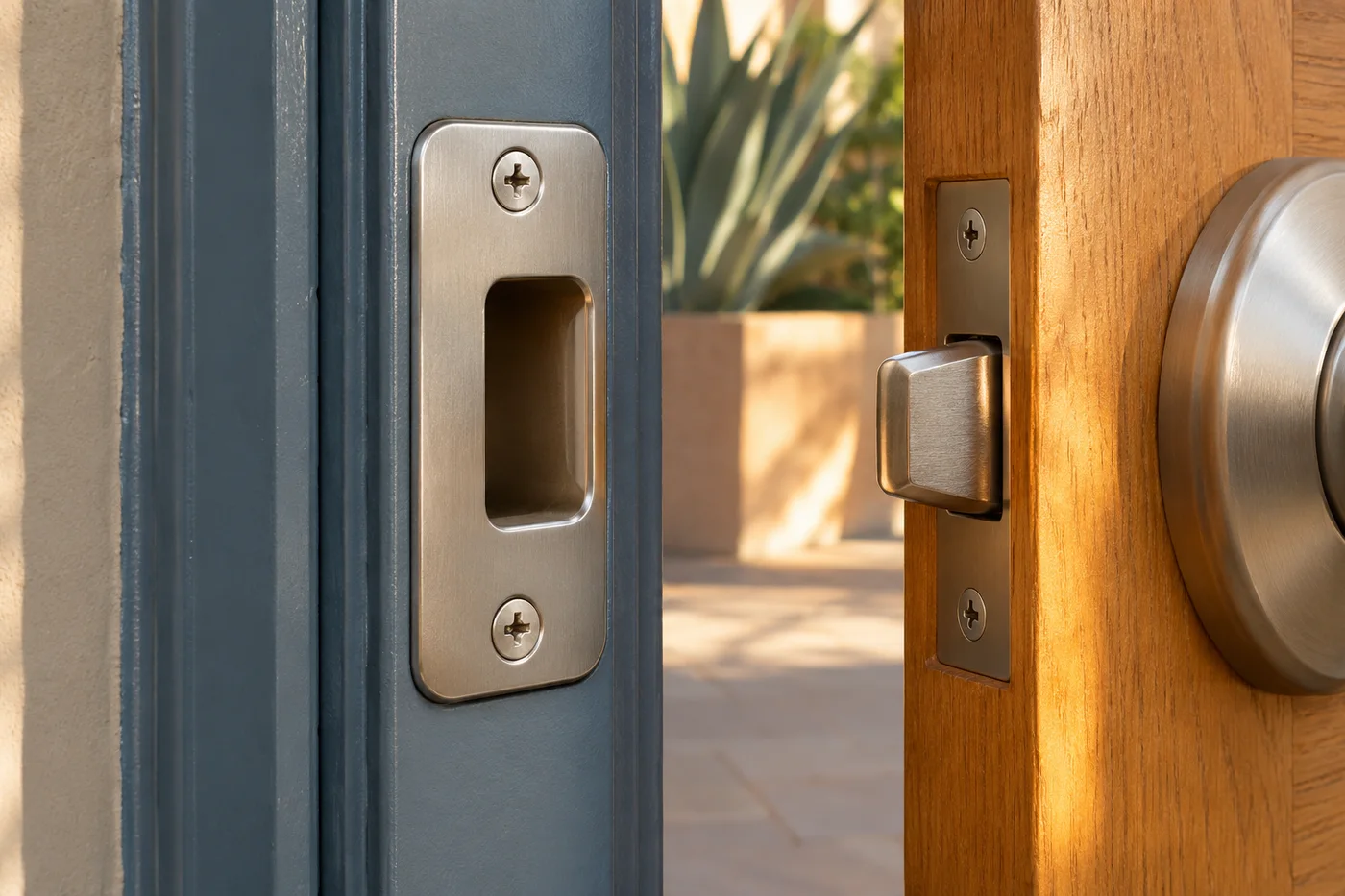
The lock is part of an opening
A key, cylinder, latch, handle, door and frame work together. A problem felt at the key doesn't prove that the cylinder is the only part involved. The way the bolt meets its opening can affect ordinary operation too.
Explain the behavior in plain terms. Does the key stop before it turns? Does the handle move without releasing the latch? Does the bolt catch when the door is shut? You don't need to remove a part or know its technical name before discussing the request.
For lock repair in Corona, mention whether the difficulty started suddenly, followed damage or gradually became normal. A repair recommendation should account for that history and the actual installed hardware, rather than treat every sticking key as a reason to replace the entire set.
A second key can provide useful information
If another existing key behaves differently, say so. A worn or damaged key and a fault in the lock can produce different patterns. Avoid adding force to a blade that is bending, and don't use other objects to try to demonstrate the problem.
Keep loose pieces if a key has broken. Mention whether part remains inside, whether the door is open or closed and whether you still have ordinary access through another entrance. Those facts help distinguish an access request from a repair that can be planned.
If access is blocked now, read the emergency locksmith information. If the mechanism works and the concern is old keys, the rekeying page explains a different outcome. A repair and a key change may both be relevant, but they should be identified separately.
Retaining hardware can be a sensible result
Sometimes the appropriate work concerns one faulty part or the way the opening operates. Other hardware may still be suitable. Ask which pieces would stay, what would be replaced and how the proposed work addresses the behavior you've described.
Replacement may be appropriate when parts are damaged, unsuitable or unavailable. That decision should be explained for the actual door. A different finish, handle shape or electronic function is also a design choice, not evidence that the existing fault requires every part to change.
Corona's Circle City history and newer planned areas don't tell you which lock a particular property uses. For visible hardware changes, consider any owner, manager or association requirements before ordering. A general site cannot approve an exterior alteration or guarantee compatibility with a door it hasn't assessed.
A workplace door needs its own authority
In an office or shop, the fault may be noticed by someone who doesn't control the hardware. Identify the affected entrance and who can approve repair. A suite lock and the shared building entrance may have different managers, even when the same people use both.
Tell the person handling the request whether the door needs to secure at closing, admits customers through the day or controls an internal room. That role helps frame the visit. It doesn't establish support for every powered entrance, access-control system or commercial mechanism.
The commercial locksmith page discusses staff keys and shared permissions. If the same property also has a household request, list the openings separately so a repair at one door isn't mistaken for work across the entire building.
Check the repair during normal use
A repaired opening should be understood by the person who uses it. Try the agreed key, handle and locking functions as appropriate, without forcing the door to create a demonstration. If the fault was intermittent, explain the circumstances in which it used to appear.
Keep the receipt and any written terms with the description of the work. If an inspection adds a part or changes the recommendation, ask what was found and agree on the revised scope before proceeding. A clear explanation is more useful than a vague promise that everything has been upgraded.
For a home, see residential lock information. Local context is available for Home Gardens and Chino. Confirm the actual opening, equipment and available service when discussing your request.
Questions about the request.
Does a stiff key mean the lock must be replaced?
Should I take the handle off before calling?
Can a repair also change which keys work?
Context checked November 9, 2026. Place photographs do not imply a business partnership or completed service job.